
Recently read: Two books that are absurd and surreal, serious and unserious
Reviewing Lost Lambs and Artful

I’ve spoken with friends before about how we need to romanticise winter more, but truthfully, I don’t think I’ve ever had an issue trying to. I’ve always found comfort in cool breezes and cloudy days. Warm drinks, cosy clothes and soft socks have always felt romantic to me. I always tend to read more in the autumn and winter months, too.
To mark the transition into March, I started with a couple of unexpectedly fun books. I finally sat down and started Madeline Cash’s debut, Lost Lambs, and randomly picked up Ali Smith’s Artful. I also spent a night re-reading Sally Rooney’s Mr Salary and read what might be my final Frieda McFadden (I don’t know how much longer I can keep doing it to myself).
Below, I’ve shared my second thoughts on the former of the stories.
Lost Lambs by Madeline Cash
3.7/5
I know some people will make the case for checking Goodreads ratings and poring over reviews before starting a new book. I’m on the fence about this myself, but Lost Lambs came with so much hype, I needed to bite the bullet and see what I was getting myself into. There were a few favourites (like “If Wes Anderson wrote Little Women”), but the one that stuck with me was a note comparing it to The Simpsons: Hit and Run. Weird, but fitting?
A topline summary – Lost Lambs alternates between the perspectives of the five members of the Flynn family household (with a few random chapters allocated to various side-characters). It starts as Catherine and Bud open their marriage and chaos ensues in different ways for each character.
It really reminded me of the Bee Sting with its detailed family dynamics (if the Bee Sting were more irreverent). Admittedly, I wasn’t pining for the characters, but I was captivated by their various antics. It was funny, incredibly detailed, not particularly serious yet quite tender and all the same, unhinged. It was a tad (a lot) unrealistic but I don’t think the author was trying to be real, which was actually quite refreshing. And the final couple of pages were perfection – they tied everything together very nicely.
Underlined:
“This moment of joy and communion transcended the Flynns obvious domestic flaws like grace transcended denomination. Was it delusion? Hysteria? Whatever made this family of freaks seemed to be making them very something... very something indeed. Something where something had no business being. Like how people who almost freeze to death report feeling warm. That was what it was: warmth. It was positively tropical in the Flynn booth.”
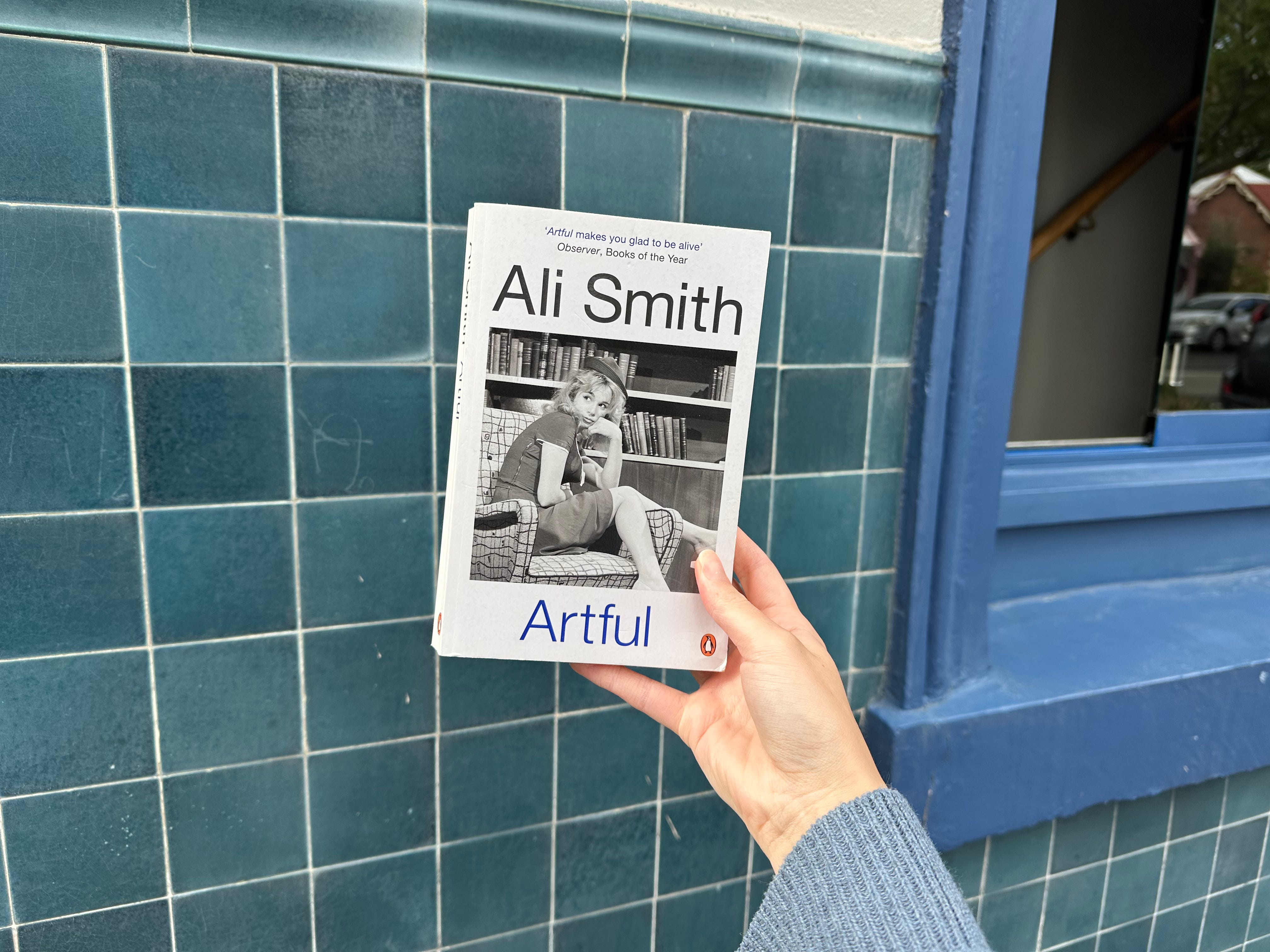
Artful by Ali Smith
4/5
This was the second attempt at Ali Smith’s Artful. I’d tried it on audiobook a while ago, and while I was taken with her divine Scottish accent, I found myself half an hour in with no idea what was happening. It didn’t seem to follow a typical, linear structure. It felt a bit absurd, too.
Then, last week, I was home alone with headphones on and candles lit, and I decided to pick it up. I ended up finishing it the next night.
It’s taken from a series of lectures she delivered at St. Anne’s College, Oxford, which took the form of these “discursive stories”. It reads mostly like a novel, with a narrator haunted by the ghost of a former lover, and it weaves between narrative and a type of nonfiction meditation on art and writing.
Artful wasn’t an easy book to read, but it did feel impactful. I finished it feeling both mesmerised and taken aback by its surreal, magical quality. It made me feel oddly enlightened. Reading it, I was confused and disoriented, yet didn’t want to put it down. I finished it feeling a strong sense that I needed and wanted to write more.
Underlined:
“I was at a loss. If anything I was more at a loss.”
“Books themselves take time, more time than most of us are used to giving them. Books demand time. Sometimes they take and demand more time than we’re ready or yet know how to grant them; they go at their own speed regardless of the cultural speed or slowness of their readers’ zeitgeists. Plus, they’re tangible pieces of time in our hands. We hold them for the time it takes to read them and we move through them and measure time passing by how far through them we’ve got, what the page-edge correlation (or percentage, if we’re using a digital reader) between the beginning and the end is.”
“You can’t step into the same story twice - or maybe it’s that stories, books, art can’t step into the same person twice.”
“Because when I think about what it was like to live with you, it was like all these things. It was like living in a poem or a picture, a story, a piece of music, when I think of it now. It was wonderful.”