
Recently read: I finished Deborah Levy's new novel.
Reviewing My Year in Paris with Gertrude Stein by Deborah Levy

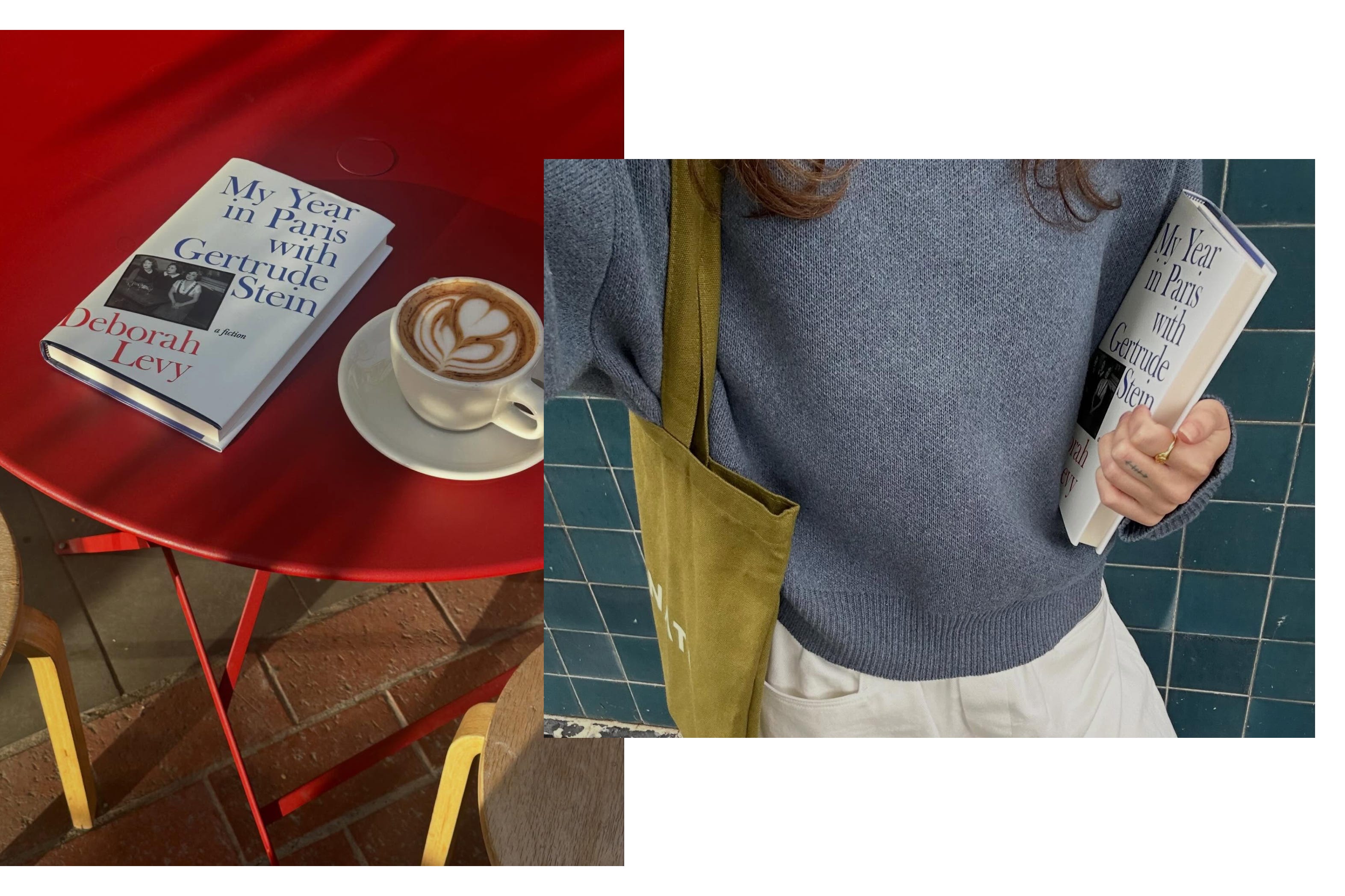
I feel a protective, stubborn kind of reverence for art that I hold close. I’m self-aware enough (I hope) to acknowledge that it most surely comes from a deep-seated desire to feel like I’m the only person who could really, truly understand it. Fuelled by an ongoing identity crisis or appreciation for creativity, either or.
I was like that with Deborah Levy’s writing for a while. I came across The Cost of Living on a whim while studying abroad in Paris (fittingly, that feels quite full circle now, given this latest book of hers). I read it, freezing in the Luxembourg Gardens on my way to and from university classes and attempted to get through chapters while sitting alone at cafes. I then went back in time and read the first book in the trilogy and then inhaled Real Estate the minute it was released in 2021.
Afterwards, I slowly started working my way through her fiction catalogue. While I was happy to talk and write about her novels, I kept the Living trilogy close to my heart. I’d look away, uninterested, if it came up, despite feeling, deep down, a whirlpool of emotions. Speaking of it without proper devotion and care felt like it would strip it of its meaning or something.
The more I read, the more I don’t even know if I get it. It’s a mystery to me, and it only feels increasingly complex the further in I get – addictively so.
Anyway, in the spirit of trying not to be weirdly secretive about my love for Levy, I’ve made some notes on the book and what it was like reading it below.
Book 19: My Year in Paris with Gertrude Stein by Deborah Levy.
4.5/5.
This book is about a character who is trying to write an essay about Gertrude Stein. It’s a bit of a paradox, really, because it feels like I read a story about Deborah Levy figuring out a way to write about Gertrude Stein for herself, which she’s done in a very creative way.
The story itself is sort of split in two. The fictional half is held up by an unnamed English author living in Paris who is almost going a little mad trying to understand the writer, Gertrude Stein. It’s there she befriends two women: Eva, a Danish expat whose husband is building them a home in Seattle while she finishes her graphic novel, and Fanny, a French polyamorous financial advisor. Together, the three of them cook, make a life in Paris and discuss art, sex and politics, while sort of looking for Eva’s missing cat.
Then, there’s the biographical side. Where one page or chapter will be rooted in the present day (sometime around 2024), the next transports you into the work and world of Gertrude Stein in the early 1900s, quite aptly delivering a detailed account of her life and who she was, despite being buried in the pages of what is clearly labelled “a fiction”. Despite that, I found that I learned a lot about her, actually.
I felt like I learned more about Levy as well. One line that stuck with me was – “she considered paragraphs to be more emotional than sentences” – because I’ve always found Levy’s writing to be most powerful in large passages. Her sentences are actually quite simple in structure, but her writing as a whole feels incredibly complicated. Take this book, for example. It’s fiction, it’s non-fiction, it’s a biography inside a story, it’s a book about Gertrude Stein told through someone trying to write a book about Gertrude Stein, it’s very meta. It’s Levy completely pushing the boundaries of genre.
The character in this book says something about spending years trying to understand Gertrude Stein. I feel the same with Levy.
The end of the book drives this point home. It says, “Gertrude Stein was a big presence, but I don’t think anyone can ever get to the bottom of it.”
Deborah Levy, you’re a little to me what I think Gertrude Stein is to your protagonist.
Underlined:
“I wanted my essay to be a clear stream, but there was so much going on. A lost cat, Eva’s missing husband, the vast menu of Fanny’s erotic conquests, finding my way around Paris, the temptation to put down Stein’s writing and read Georges Simenon instead. The streams were flowing through the nineteenth century into the twenty-first and all over the place.”
“She thinks Gertrude Stein is depressing me. It’s true that Gertrude Stein transmits some sort of misery to me. The exhaustion of reading her prose. The never getting to the it of it. Somehow it is my destiny to find her.”
“Meanwhile, rain was falling gently on Paris, including on all its trees and statues and on every caress at a bus stop and on every kiss by a fountain.”
“What was it?
Love.
I needed to be deep in it.”
“But your life with us in Paris has been magnificent. Perhaps you can’t bear being happier than when we found you? Look at the way you’re enjoying our English friend’s peach liqueur. I took you to all the clubs to dance. You devoured at least 20 of France’s two hundred and thirty cheeses and all the art in our museums. We have been together through four seasons. Our English friend took you swimming. All right, swimming is not as exciting as stealing a cat, I understand, but our English friend has so generously shared her thoughts on her essay about gross Gertrude Stein with her woollen stockings and the control-freak constipated wife. I mean, Eva, you are a self-ordained assistant in this endeavour, our friend never made it official. And now you want to be alone but together with Hamish again.”